Crypto Adoption Set to Accelerate in 2026 as ETFs, Stablecoins, Tokenization Gain Ground


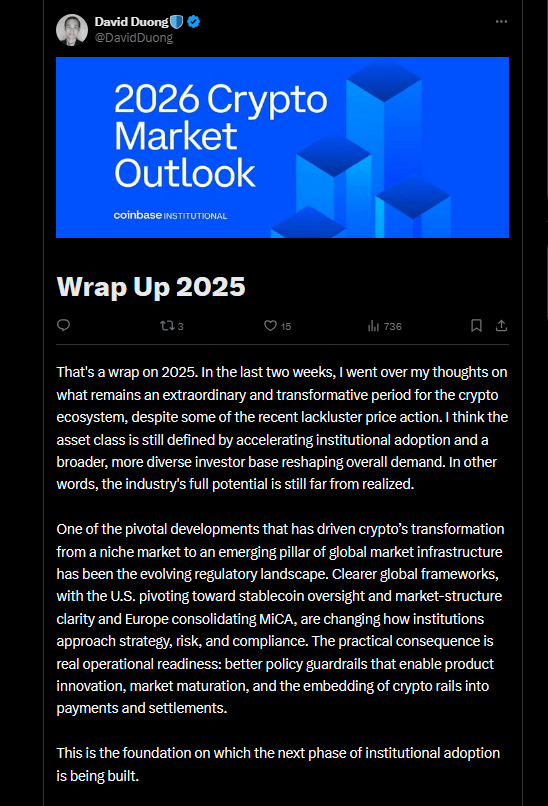
The head of investment research at Coinbase, David Duong, said that the momentum from crypto exchange-traded funds, stablecoins, tokens, and clear regulations is likely to build in 2026 and accelerate the widespread use of digital assets.
“We expect these forces to converge in 2026 as ETF approval timelines tighten,” he said. According to Duong, last year it laid an important foundation by providing more regulated methods to investors and by pushing crypto tools closer to mainstream finance.
— David Duong🛡️ (@DavidDuong) December 31, 2025
Regulatory Measures Encourage Institutional Mobility
Duong pointed out that clear regulations in the US and Europe are changing the way large institutions treat crypto. The US has moved towards stablecoin regulation with the GENIUS Act, and Europe has moved further with MiCA.
Those steps are used by firms to make operations ready for new products and to connect crypto rails with payments and settlements. Better guardrails allow firms to design products that can be used by a wider set of customers, he said.
The Basis of Investing From Single Issues
Based on reports, the demand for crypto is no longer driven by a single story or only early adopters. Adoption figures are holding strong, at 10% in Q1 2023 and close to 10% in Q1 2025, reflecting broad, strong interest across markets.
That mix of suppliers and end-users now includes corporate stocks and long-term investors, which could reduce rapid trading tied to short-term speculation. Some money looks strategic and may stay in place for a long time.
Markets Respond With Big Money
Meanwhile, reports show that global investment funds have raised more than $48 billion in exchange-traded products (ETPs) related to digital currencies from January 2023 to December 2025—this is an increase from 2024.
Investment funds focused on Ethereum almost tripled their income during this period compared to 2024.
The growth of stablecoins continues to be significant; their market capitalization is around $300 billion, but stablecoins are still processing billions of dollars through full-fledged trading venues and DeFi.
Token assets are relatively small, with a market cap of more than $1.2 billion, but analysts expect growth as institutions explore blockchain-based ownership and equity investments.
Tokenization and business use
Companies have started experimenting with digital asset values and tokenized collateral. Those are assessed for use in lending, payments, and as part of business balance sheets.
Based on Duong’s idea, tokenized collateral can be widely accepted in general transactions, and stablecoins may be used more in delivery-vs-payment setups. This practical use is mostly viewed by banks and depositors.
Outlook for 2026
Duong summed up his vision by emphasizing three things: clear policy, operational readiness, and useful products. According to him, when regulators set clear rules, institutions create safe systems, and companies design products that people can actually use, crypto can move from a niche market to a more important role in finance.
Featured image from Chainalysis, chart from TradingView

Planning process because bitcoinist focuses on delivering well-researched, accurate, and unbiased content. We maintain strict sourcing standards, and each page is diligently reviewed by our team of senior technical experts and experienced editors. This process ensures the integrity, relevance, and value of our content to our readers.