US Crypto Policy Debate Intensifies as Support for Clear Regulation Cracks


Washington’s long-running effort to bring regulatory clarity to the US crypto market has entered an uncertain phase. The Digital Assets Market Transparency Act, known as the CLARITY Act, was expected to move closer to a Senate vote this week.
Instead, the sudden withdrawal of support from Coinbase and the temporary suspension of Senate leadership have exposed deep divisions in the industry and among lawmakers. While the White House insists the bill is still on track, the debate over how digital assets should be regulated is increasingly divided.
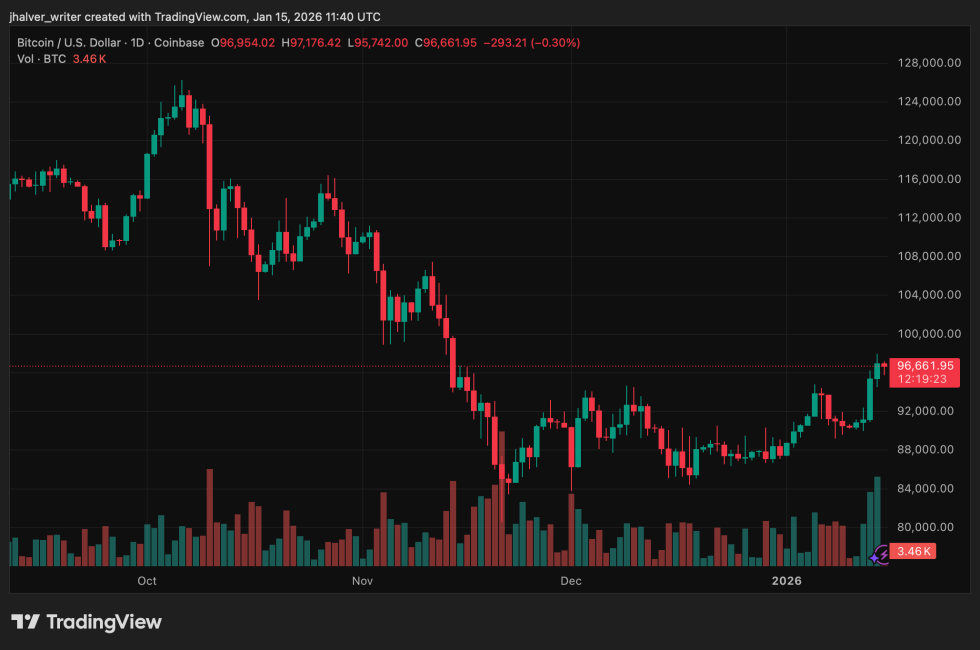
BTC's price records some gains on the daily chart. Source: BTCUSD on Tradingview
Coinbase Withdrawal Causes Legal Suspension
The immediate change came when Coinbase CEO Brian Armstrong announced that the company would no longer be able to support the current draft of the CLARITY Act.
Armstrong argued that the bill would be worse than the current regulatory uncertainty, citing concerns about token allocation limits, crypto reward limits, and increasing government access to financial data.
Shortly thereafter, Senate Banking Committee Chairman Tim Scott introduced a pause in the bill’s process, canceling the scheduled mark.
Scott described the delay as procedural rather than political, saying negotiations are ongoing and joint negotiations are ongoing. The new marking date is scheduled for January 27, once the new payment language is released.
Despite the setback, White House AI and crypto czar David Sacks reiterated that the administration still supports the legislation. He said the break should be used to resolve outstanding issues and promote a framework that allows for innovation while strengthening surveillance.
Industry Split Over SEC and CFTC Roles
At the heart of the dispute is the separation of regulatory authority between the Securities and Exchange Commission (SEC) and the Commodity Futures Trading Commission (CFTC) as outlined in the CLARITY Act.
Crypto exchanges generally favor the CFTC approach, which treats many digital assets as commodities. The SEC, in contrast, enforces securities laws that impose strict compliance requirements.
Critics argue that the bill changes too much power to the SEC, especially over token shares and certain crypto products. Coinbase warned that the proposed rules could effectively block the development of on-chain share trading and reduce user reward schemes.
Other industry leaders, including executives from Ripple, a16z, and Kraken, have taken a cautious stance. While acknowledging flaws in the draft, they argue that passing some form of market structure legislation is better than leaving the sector in regulatory limbo.
Banks, Stablecoins, and Broader Stakes
Another controversial issue is stablecoin regulation. The CLARITY Act would make it difficult for crypto platforms to offer yields or interest-like rewards on stablecoin holdings. Banks support the restrictions, saying they protect financial stability.
Lawmakers also point to past failures, such as the collapse of FTX, as evidence that clear rules are needed to protect consumers and national security. However, frustration is building behind the scenes.
Senate sources indicate that some members of the committee were unhappy with Coinbase’s timing, seeing the withdrawal as an interruption to months of negotiations.
Cover image from ChatGPT, BTCUSD chart from Tradingview

Planning process because bitcoinist focuses on delivering well-researched, accurate, and unbiased content. We maintain strict sourcing standards, and each page is diligently reviewed by our team of senior technical experts and experienced editors. This process ensures the integrity, relevance, and value of our content to our readers.