Crypto Regulation: Nigerian SEC Raises Exchange Capital Requirement to N2 Billion

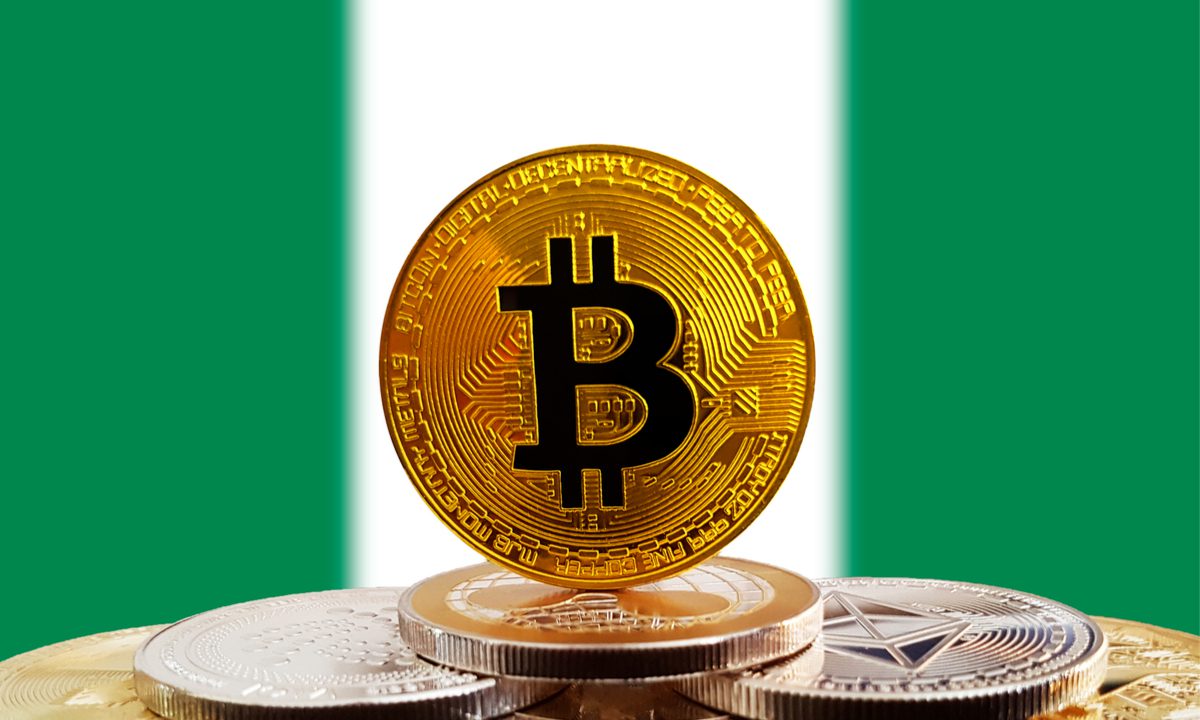
Nigeria, Africa’s most populous country, is paying close attention to its rapidly developing cryptocurrency industry marked by a series of new laws. In a recent development, the Nigerian Securities and Exchange Commission (SEC) has shared a revised minimum capital for all regulated market entities, including digital asset market operators.
Nigerian Regulator Raises Minimum Funding for Crypto Exchange by $1.05M
On January 16, 2026, the Nigerian SEC issued a circular amending the minimum capital (MC) requirements for major financial companies, namely: capital and non-capital market operators, market infrastructure institutions, capital market intermediaries, financial technology operators (FinTech), virtual asset service providers (VASPs), and commodity market intermediaries.
The security regulator explained that the revised framework of the MC is to improve operational sustainability, align capital adequacy, promote market stability, and support innovation in emerging market segments such as the cryptocurrency industry.
In relation to VASPs, the minimum capital for digital asset exchanges (DAX) and digital asset custodians has been increased from N500 million ($352,000) to N2 billion ($1.4 million). Meanwhile, all digital assets offering platforms (DAOP) responsible for the issuance and basic sale of digital assets to the public are expected to meet the N1 billion ($704,111) capital limit.
Notably, the new Nigerian SEC circular extended its recognition to many VASPs that have been operating in the regulatory space. This includes ancillary virtual asset service providers (AVASPs) that provide ancillary services such as blockchain analytics tools, etc. that are now authorized to operate with a minimum of N300 million ($211,200).
Under the new regime, the basic capital requirements for both digital assets intermediary (DAI) and digital assets platform operators (DAPO) have also been set at N500 million ($352,000). In new additions, real-world asset tokenization and offering platforms (RATOP) now have a fixed minimum capital requirement of N1billion ($704,111).
According to the SEC, all organizations involved are advised to comply with the new regime on or before June 30, 2027, as failure to do so will result in penalties, including suspension or revocation of registration, as determined by the Commission.
Nigerian Government Increases Focus on Crypto Industry
Apart from the recent SEC circular, other developments indicate that the Nigerian government is increasing its participation in the cryptocurrency market.
Notably, the new Nigerian Tax Administration Act (2025) now requires all digital asset activities to be linked with Tax Identification Numbers (TIN) and National Identification Numbers (NIN), effectively capturing the emerging industry as a new tax base.
These latest moves follow the recent collaboration between the SEC and the Nigerian Police Force (NPF) focused on cracking down on operators of Ponzi schemes and other similar scams.
Featured image from Tech Cabal, chart from Tradingview

Planning process because bitcoinist focuses on delivering well-researched, accurate, and unbiased content. We maintain strict sourcing standards, and each page is diligently reviewed by our team of senior technical experts and experienced editors. This process ensures the integrity, relevance, and value of our content to our readers.