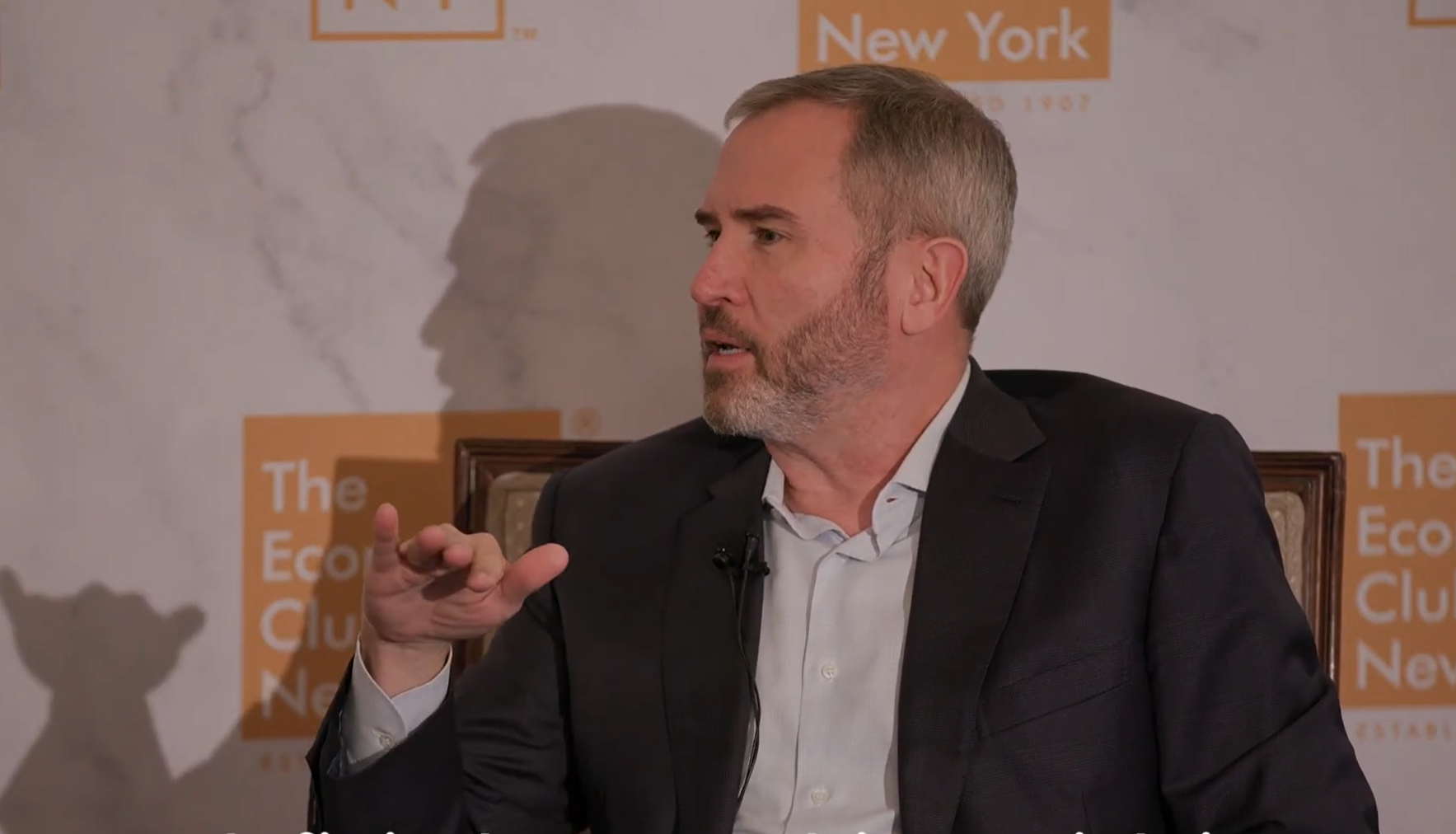
Bitcoin’s drop below $75,000 has market participants grappling with a common question: how long does a bear market last if the data refuses to improve. CryptoQuant head of research Julio Moreno, speaking on The Milk Road Show on Feb. 2, he said that many demand and liquidity indicators still show weakness and that the easing process could take months, not weeks.
The Bitcoin Bear Market Can No Longer Be Denied
Moreno’s main framework is CryptoQuant’s “Bull Score Index,” a combination of 10 metrics that include on-chain valuation, liquidity conditions, market data, and one technical trend input. “The index goes from zero to 100. Zero is the best, 100 is the best,” he said. “First of all, the index is at zero, which is the lowest point […] and it was between zero and 10 maybe a month and a half ago […] What this tells us is that there are many weaknesses in each data [or] markets.”
He pointed out how quickly the same index turned in October, when the closing event accelerated from a bullish to a bearish reading. In early October the index reached 80, “within the high-level zone” before retreating toward 20-30 “in a few days,” a move Moreno interpreted as a failure of momentum that turned a late rally into a short-term spike.
Moreno’s main point was about lead time. He said the index “is often […] bearish before a major price correction,” positioning it as an early warning system rather than a delayed confirmation tool.” In the show, he bluntly summed up the current regime: Bitcoin is “well in a bear market,” and “the data doesn’t support any meaningful reversal.”
Related Reading
On demand, Moreno highlighted the position of US Bitcoin ETFs, which he said switched to net sales in Q4 and remained on a downward trend until early 2026. He cited annual flows showing that ETFs sold more than 10,000 BTC in January, compared to buying 46,000 BTC in the same period last year. “If ETFs are a lot of sellers then they don’t support prices,” he said, adding that any sustained recovery would likely require that demand to stabilize and grow again.
The same dynamic is shown in the Coinbase premium, the price spread between Coinbase and offshore exchanges such as Binance. Moreno described the premium as a proxy for US demand and said it turned negative in November and has remained negative “most of the time” since then. Historically, he argued, bull markets are “driven by […] strong US demand,” and the persistence of the discount suggests that the US bid is not yet back, even after the reduction.
Moreno also pointed out that stablecoin liquidity is lacking. He tracked the 60-day swing in the USDT market, a proxy for new money entering the trading ecosystem, and said growth had stalled since mid-October. New releases often come to the trade, he explained, “and they provide […] dry powder for traders who were buying crypto at the time,” which included the expansion of the stablecoin directly into the conditions of the overall income market.
Beyond ETFs and stablecoins, Moreno said CryptoQuant’s model of long-term Bitcoin demand growth is moving closer to zero each year. “This is what drives bull markets […] demand growth, demand waves,” he said, but since October that growth has slowed down significantly.” In his view, it helps to explain why this decline continues as the market looks for a solid base.
Related Reading
Leverage positioning also decreased. Moreno used the constant rates of future financing as a lesson in long-term holding and said that the trend of the one-year average points to the bottom: “reducing appetite for long-term financing” while short-term financing needs to be interpreted differently depending on whether the market is in a bull or bear state.
How Deep Are We in a Bitcoin Bear Market Now? w/ @cryptoquant_com Head of Research @jjcmoreno
Bitcoin trades cheaper on Coinbase than Binance.
That almost never happens in bull markets.
This one signal tells you who is NOT buying the dip.
Listen to know more
— Milk Road (@MilkRoad) February 2, 2026
When Will the Bitcoin Bear Market End?
On the technical side, Moreno emphasized Bitcoin’s one-year moving average, which he treats as a state filter. “A good way to see price trends is simply to look at the one-year moving average,” he said, arguing that it serves as support in bull markets and resistance when prices break below. He noted that Bitcoin fell below it in early November and failed to recover, a pattern he said is similar to early 2022.
At key levels, Moreno described the “online trader’s price” – the estimated cost base of active market participants – as resistance above around $89,000 and $79,000. His next price target is $70,000 as a middle marker and $56,000 as a deep level tied to the same cost base framework.
Moreno closed with a warning about psychology too much like charting. “First you have to accept this. We are in a bear market. So plan accordingly,” he said. “There will be price rallies […] but don’t confuse that with the beginning of a bull market […] again […] do not touch the knife that is coming down […] market decline in months.”
As for the duration, Moreno said he could see the first credible window appearing around Q3 2026, based on historical patterns and the fact that this decline seems to have started before some previous cycle. Whether that timeline is still there, he suggested, would depend on one more bounce and more on whether demand, US flows, and liquidity indicators stop flat and start to move back up.
At press time, BTC traded at $75,041.
The featured image was created with DALL.E, a chart from TradingView.com