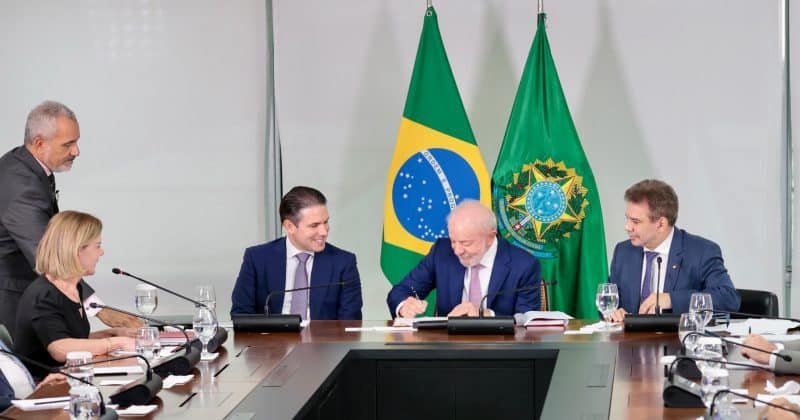
Brazilian President Luiz Inácio Lula da Silva signed Law No. 15,358, which gives judges the authority to freeze, confiscate, and confiscate crypto and other assets linked to criminal organizations.
The law, also known as the Framework for Combating Organized Crime or the Raul Jungmann Law, allows courts to take these measures during an investigation, even without a criminal conviction, and includes provisions to turn confiscated property into public money while preventing suspects from continuing to control it.
“With this law, we have the opportunity to catch those who are involved in the groups that live in luxury houses that we call crime bosses in this country. These people need to be arrested and punished so that we can really defeat organized crime,” said the President of the Republic in a statement.
What sets this law apart from regular organized crime laws
What sets this law apart from other organized crime laws in the region is its focus on digital finance.
Section 9 gives judges the power to immediately block digital assets, Pix instant payment transfers, and crypto exchange transactions, without notifying the accused, at the request of prosecutors or the police.
Pix, launched by the Central Bank of Brazil, enables people and businesses to send or receive money 24/7, instantly, using just an email, a phone number, or a unique code called a Pix key.
If the goods are clearly connected to an illegal activity, they can be sold before the final judgment through the process of “extraordinary confiscation”. The proceeds are directed to federal and state security funds, effectively turning captured Bitcoin, stablecoins, and other tokens into legal assets.
Brazil’s crypto industry benchmark
Crypto is growing faster than traditional investments in Brazil, with nearly 6.5 million people actively investing in digital assets as of February 2026, according to Crystal Intelligence.
Stablecoins such as USDT and USDC dominate the activity, accounting for nearly 90% of the total transaction volume, a pattern that authorities have long considered indicative of mass flight and money laundering.
Crypto in Brazil is driving digital and real-world crime. Organized crime networks, scams, ransomware, and kidnapping have combined to threaten national security and individual investors.
From $2.4 billion lost by the PCC to $54 billion lost to fraud by 2024, the ecosystem is always at risk.
The 2026 draft law emphasizes transparency, KYC/AML standards, cross-border reporting, and allows temporary use of seized assets. Intelligence-led oversight is key to reducing these complex financial crime risks.
Severe penalties hit organized crime
The new law establishes a comprehensive legal framework to combat ultra-violent criminal organizations, militant groups, and private forces. It creates two new crimes, including organized public administration and facilitating organized public administration, with prison sentences ranging from 12 to 40 years.
In addition to expanding the power of confiscation and confiscation, the law establishes stricter procedural times, allows judicial intervention in companies linked to criminal groups, and authorizes the imprisonment of highly protected organizations for leaders.
The law also amends the Penal Code, the Criminal Procedure Code, and several other laws to increase penalties for related crimes.