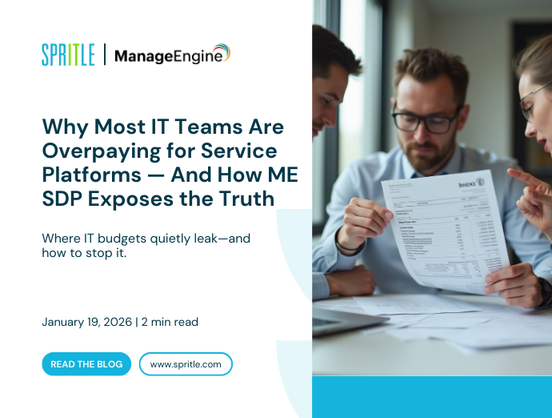
Why Most IT Teams Pay Too Much for Service Platforms – And How ME SDP Reveals the Truth

For years, IT leaders have accepted one uncomfortable truth as “normal”:
Service management platforms are expensive, complex, and painfully slow to deliver value.
Inflated contracts. Endless additions. Keys for many years.
If you’re implementing ITSM in a medium to large organization, you’ve probably asked yourself at least once:
“Do we really get what we pay for?”
The truth is—many IT teams are like that overpayment. Not because they need more features, but because the traditional ITSM market is designed to profit from complexity. And that’s it ManageEngine ServiceDesk Plus (SDP) be quiet and reveal the truth.
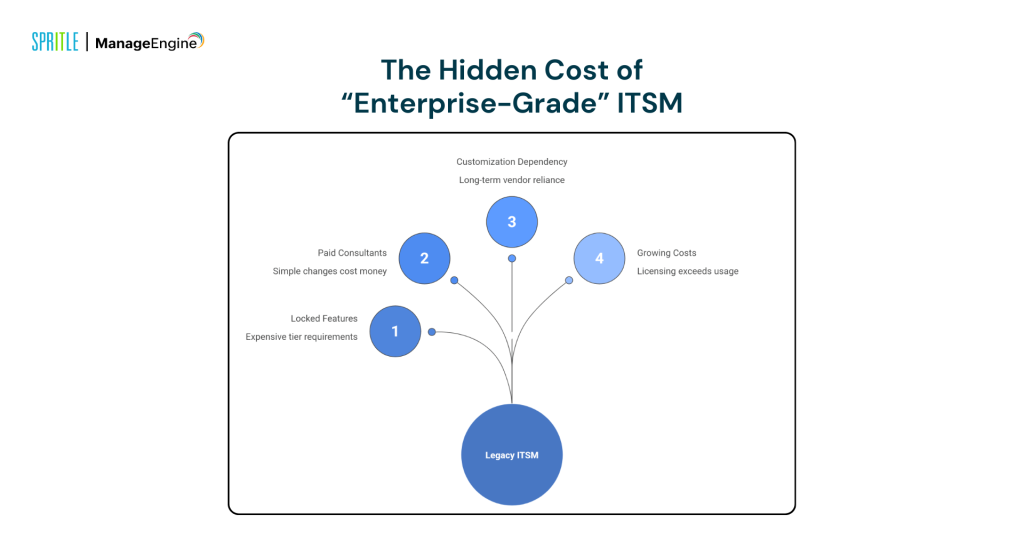
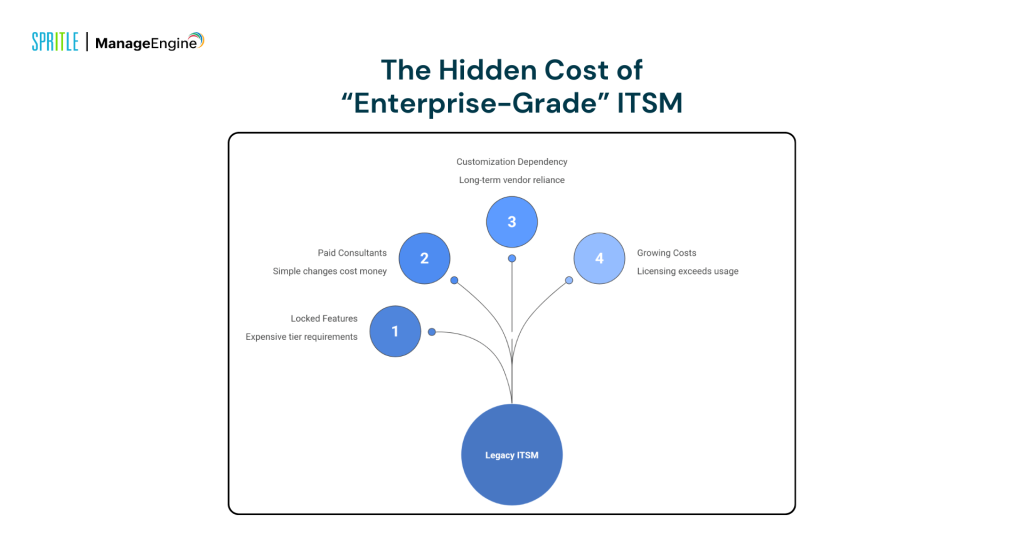
The Hidden Costs of “Enterprise-Grade” ITSM.
On paper, most ITSM platforms out there look impressive.
AI-powered workflows. Advanced automation. Business Scalability.
But once the implementation starts, the truth comes:
- Key features are locked behind expensive tiers
- Simple changes require paid consultants
- Customization turns into a long-term dependency
- License costs are increasing faster than usage
What starts as an ITSM solution gradually becomes a the budget is a black hole.
The biggest puzzle?
Most IT teams use it less than 40% of what they pay.
Yet they continue to innovate—because migration feels dangerous, expensive, and time-consuming.
That is not innovation.
That’s vendor dependency disguised as business stability.
Why IT Teams Keep Paying Too Much (Without Realizing)
1. Pricing Designed to Confuse
Many service platforms deliberately blur pricing boundaries:
- Important features are distinguished in all programs
- AI is sold as a premium add-on
- Cargo handling is charged separately
- Automation is disabled unless advanced
IT leaders approve budgets that assume future value—only to find that “future” comes with another invoice.
2. Long Processing = Sunk Cost Trap
If an ITSM tool takes 12–18 months to fully implement, switching feels impossible.
When problems arise, teams consider:
“We’ve already invested too much to change.”
This is how overpaying becomes common.
3. Intermediary Dependency Is Becoming Commonplace
For most foundations, even minor workflow changes require:
- External consultants
- Special certificates
- Additional service charges
Your ITSM tool is ultimately in charge sellersnot services.
The ME SDP Difference: Simplicity Reveals Truth
ManageEngine ServiceDesk Plus (SDP) it doesn’t compete for loudest.
It competes by removing what shouldn’t be there in the first place.
And that’s where the truth comes in.
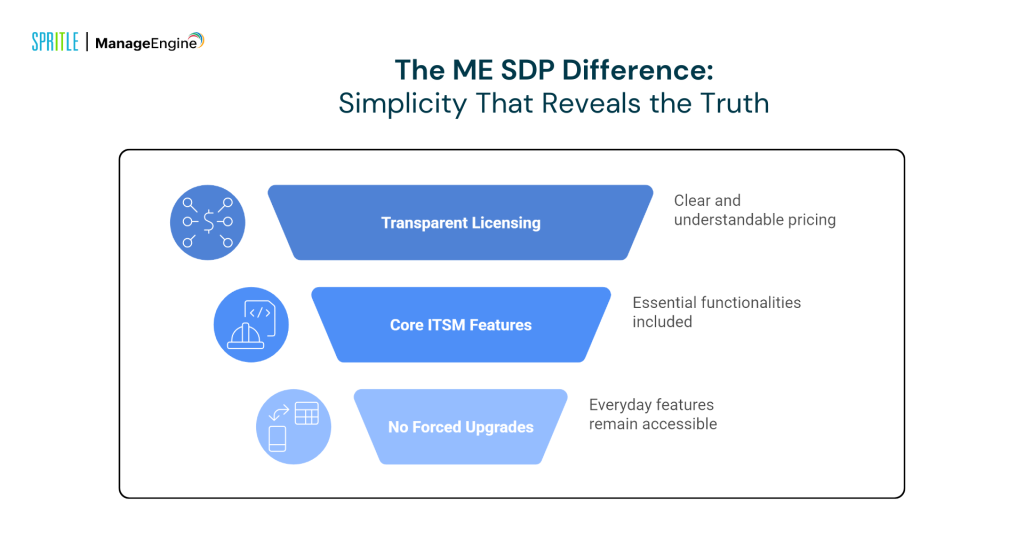
Transparent Licensing, Original Features
The ME SDP pricing model is refreshingly simple:
- Clear category-based licensing
- The main features of ITSM are included—not separated
- There is no forced development of daily operations
You pay for what you use—not what’s withheld.
For many IT leaders, this alone reveals how inflated previous contracts were.
Instant Notification Time Changes Everything
Traditional ITSM platforms often justify the cost with “business depth.”
But the delayed value is rejected.
With ManageEngine SDPGroups usually hear:
- Faster usage cycles
- Less dependence on outside experts
- Usable workflow from day one
Instead of spending months fixing the basics, teams focus on it delivery of needsnot system survival.
The earlier your ITSM works, the sooner the ROI becomes apparent—and the pricing becomes harder to explain elsewhere.
Low-Code ITSM Empowers Internal Teams
One of the biggest hidden costs in ITSM is loss of control.
ME SDP responds to that variable.
- Virtual workflow builders
- Low code defaults
- Customizable SLAs and dashboards
- Built-in ITIL alignment
Your internal team runs the platform—not the vendor.
If changes no longer require paid intervention, the cost gap between SDP and legacy tools becomes impossible to ignore.
Enterprise-Ready Without Enterprise Lock-In
A common myth:
“Affordable ITSM cannot scale. “
ME SDP proves otherwise.
For skills in all:
- Incident, Crisis, Change and Asset Management
- CMDB integration
- Business Service Management (HR, Resources, Finance)
- Cloud and on-prem deployments
Organizational level horizontallywithout being locked into a single ecosystem.
You grow on your terms—not a vendor’s roadmap.
Real Revelation: ITSM Shouldn’t Be a Luxury
When IT leaders migrate to ManageEngine SDP, the biggest consideration isn’t technology—it’s money.
They get:
- How much of the budget is covered in unused features
- How much productivity is lost due to platform complexity
- How much flexibility was offered in the contracts
And once that truth is revealed, going back becomes unthinkable.
Why This Matters More Than Ever
In today’s IT environment:
- Budgets are being reviewed
- The teams are thin
- Expectations are high
Paying premium prices for mediocre service delivery is no longer acceptable.
ITSM must justify its costs with results—not promises.
ManageEngine SDP simply does not compete with legacy platforms.
It’s tempting to think that ITSM has to be expensive to be effective.
Final Thoughts: The Cost of Truth Is Less Than the Cost of Silence
Most IT teams don’t pay much because they don’t care.
They pay more because the industry has taught them to accept it.
ManageEngine ServiceDesk Plus changes that narrative.
By providing transparent pricing, immediate value, and real ownership, SDP reveals a simple truth:
Great ITSM doesn’t need complexity to be powerful—
and it certainly doesn’t need pricing to be good for business.
Once you realize that, the numbers start to speak for themselves.
And overpaying eventually ends.